Neem (Mwarubaini / Muarubaini)
“Mwarubaini” — the legendary “tree of forty cures.” Used for malaria, skin diseases, wounds, and immune support. A cornerstone of traditional medicine across Tanzania.
- Description
- Botanical Information
- Local Names
- Traditional Uses
- Preparation Methods
- Dosage & Safety
- Scientific Notes
- Culinary Uses
- Safety Information
- Where It Grows
- Where to Buy
Description
The Neem tree (Mwarubaini in Kiswahili) is one of the most revered medicinal plants in Tanzania. Its name literally means “tree of forty cures,” a testament to its remarkable healing properties. In modern times, over sixty distinct medicinal uses have been documented [citation:5][citation:7].
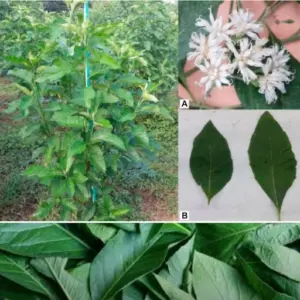
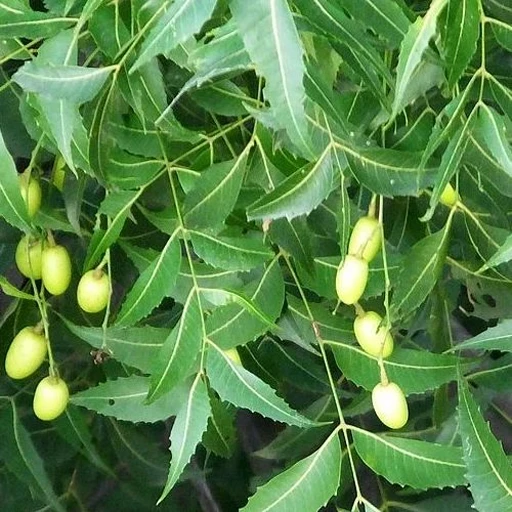
This fast-growing, evergreen tree can reach heights of 15-20 meters, with a dense leafy canopy that provides excellent shade. The leaves are glossy green, compound, with curved, pointed leaflets. Small, creamy white, fragrant flowers hang in long sprays, and the fruit produces yellow berries when ripe, containing 1-2 oily seeds [citation:9].
Neem was introduced to East Africa during the 19th century by Indian immigrants who valued its medicinal properties. Today, it is widely naturalized across Tanzania, particularly in coastal and lowland regions [citation:3][citation:6].
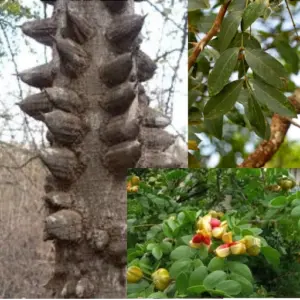
Important Note: True neem (Mwarubaini kamili) must not be confused with the toxic Bead Tree (Mwarubaini nusu or Melia azedarach). The true neem has smooth seeds, while the toxic look-alike has ribbed seeds. Always ensure you are using the correct species [citation:5][citation:7].
For detailed information on uses, preparation, and safety, please explore the tabs below. To purchase, contact any of the healers listed in the “Where to Buy” tab.
Scientific Name: Azadirachta indica
Family: Meliaceae (Mahogany family)
- Kiswahili: Mwarubaini, Muarubaini, Mkilifi
- English: Neem, Indian Lilac
- Kamba: Muarubaini
- Giriama: Mkilifi
- Luhya: Mwarubaini
- Sambaa: Msekeretsa
- Arabic: Neeb
- Sanskrit: Nimba
- Tamil: Vembu
- Hindi: Neem
The Neem tree is one of the most revered medicinal plants in Tanzania and across East Africa. Its Kiswahili name "Mwarubaini" means "tree of forty cures," reflecting its remarkable range of healing properties. In modern times, over sixty distinct medicinal uses have been documented [citation:5][citation:7].
Malaria and Fever
A handful of fresh leaves is boiled in a liter of water for 15-20 minutes. The decoction is taken as a powerful antimalarial remedy. One glass is taken three times daily for seven days [citation:2]. This treatment has been used by traditional healers for generations and is supported by modern research showing neem's antimalarial properties.
Skin Conditions
Neem is exceptionally effective for skin diseases. The oil extracted from seeds is applied directly to affected areas for fungal infections, ringworm, eczema, scabies, and acne. For widespread conditions, 2 drops of neem oil can be added to a basin of hot water for soaking fingers and feet [citation:2][citation:6]. Clinical studies have shown neem leaf extracts can cure ringworm, eczema, and scabies within 3-4 days in acute cases [citation:6].
Immune System Support
Chewing 8-10 fresh neem leaves early in the morning for 24 days is traditionally believed to protect the body from diseases including diabetes, hypertension, and skin problems [citation:6]. The leaves are also used to boost immunity in chronic conditions.
Wound Healing and Infections
Neem water, prepared by boiling 8-10 leaves in one liter of water, is used to bathe wounds, bedsores, and varicose veins. The strong antiseptic properties help prevent infection and promote healing [citation:6]. Neem bark also contains powerful antiseptic compounds.
Digestive Health and Intestinal Worms
Neem preparations have been traditionally used to treat intestinal helminthiasis (worms), constipation, and other digestive disorders [citation:6]. The bitter properties stimulate digestion and act as a natural vermifuge.
Other Medicinal Applications
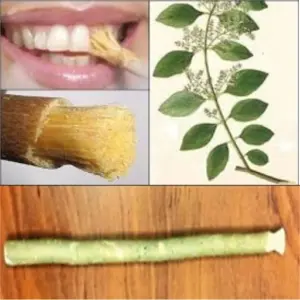
Neem is also used for respiratory disorders, rheumatism, chronic syphilitic sores, indolent ulcers, and as a general health promoter. The leaves, bark, and oil have demonstrated anti-inflammatory, analgesic (pain-relieving), and antipyretic (fever-reducing) properties [citation:6]. Neem twigs are traditionally used as chewing sticks for dental hygiene, and neem bark is used in soap and toothpaste.
LEAF DECOCTION (MALARIA/FEVER)
Boil a handful of fresh neem leaves in 1 liter of water for 15-20 minutes. Strain. Take 1 glass (250 ml) three times daily for 7 days. Children 10-16 years: 1/2 glass three times daily. Children 6-10 years: 1/4 glass three times daily.
NEEM OIL (EXTERNAL USE)
Extract oil from neem seeds by pressing. Apply directly to affected skin areas for fungal infections, ringworm, eczema, scabies, and acne. For hand/foot conditions, add 2 drops of neem oil to a basin of hot water and soak.
NEEM LEAF PASTE
Grind fresh neem leaves with a small amount of water to form a paste. Apply directly to wounds, burns, boils, ulcers, and skin infections.
NEEM LEAF TEA (IMMUNE SUPPORT)
Dry neem leaves and use as tea. Steep 1 teaspoon of dried leaves in hot water for 5-10 minutes. Drink 1 cup daily for general wellness.
NEEM WATER (WOUND BATHING)
Boil 8-10 fresh neem leaves in 1 liter of water. Allow to cool. Use the water to bathe wounds, bedsores, or varicose veins as needed.
CHEWING STICK (DENTAL HYGIENE)
Use a thin neem twig as a natural toothbrush. Chew one end until it forms bristles, then use to clean teeth. The antibacterial properties help prevent gum disease and tooth decay.
Dosage Guidelines
- Leaf Decoction (Adults): 1 glass (250 ml), 3 times daily for 7 days for malaria/fever [citation:2]
- Leaf Decoction (Children 10-16 years): 1/2 glass (125 ml), 3 times daily [citation:2]
- Leaf Decoction (Children 6-10 years): 1/4 glass (60 ml), 3 times daily [citation:2]
- Children under 6 years: Not recommended for internal use [citation:2]
- Chewing neem leaves: 8-10 leaves daily for 24 days for immune support [citation:6]
- Neem oil (external): Apply to affected area 1-2 times daily
Contraindications
- Pregnancy: Neem oil and internal neem preparations should be avoided during pregnancy as they may induce abortion [citation:1]. Neem oil should not be taken internally by pregnant women.
- Children under 6 years: Internal use is not recommended [citation:2].
- Prolonged internal use: May cause irritation of the liver and kidneys if taken in large doses for extended periods [citation:3].
- Neem oil caution: Consuming neem oil internally is not recommended. Doses as small as 5 ml have reportedly caused severe reactions in infants [citation:6][citation:8].
- Distinguish from toxic look-alike: Do not confuse with the Bead Tree (Melia azedarach), known locally as "Mwarubaini nusu," which has ribbed seeds and is toxic [citation:5][citation:7]. True neem (kamili) has smooth seeds.
- Excessive use: As with any medicinal substance, neem should not be taken to excess. Very large doses may cause digestive upset [citation:6].
Neem has been extensively studied for its pharmacological properties. The tree contains over 140 active compounds, including azadirachtin, nimbin, and quercetin, which contribute to its diverse medicinal effects.
Antimalarial Activity: Research has confirmed neem's effectiveness against Plasmodium falciparum, the parasite responsible for the most severe form of malaria. The leaf extract has been used in traditional medicine for this purpose for centuries [citation:6].
Antimicrobial Properties: Neem demonstrates significant antibacterial, antifungal, and antiviral activity. Clinical studies have shown dried neem leaf extracts can cure ringworm, eczema, and scabies within 3-4 days in acute cases [citation:6].
Anti-inflammatory Effects: Scientific investigations have confirmed neem's analgesic (pain-relieving), antipyretic (fever-reducing), and anti-inflammatory properties, supporting its traditional use for treating fevers and inflammatory conditions [citation:6].
Origin and Distribution: Neem is native to the Indian subcontinent but was introduced to East Africa during the 19th century by East Indian immigrants who propagated it for its medicinal properties. It is now widely naturalized across Tanzania, especially in coastal areas and lowland regions [citation:3][citation:6].
Important Identification Note: True neem (Azadirachta indica, "Mwarubaini kamili") must be distinguished from the toxic Bead Tree (Melia azedarach, "Mwarubaini nusu"). The seeds of true neem are smooth, while the toxic look-alike has ribbed seeds with holes at each end [citation:5][citation:7].
⚠️ Critical Warnings
- Pregnancy: Neem oil and internal neem preparations should be strictly avoided during pregnancy as they may induce abortion. Neem oil should never be taken internally by pregnant women.
- Children under 6 years: Internal use is not recommended for young children. External use (oil on skin) should be done with caution.
- ⚠️ Neem oil poisoning: Consuming neem oil internally is extremely dangerous. Doses as small as 5 ml (one teaspoon) have reportedly caused severe reactions, including vomiting, seizures, and metabolic acidosis in infants and children.
- Prolonged internal use: May cause irritation of the liver and kidneys if taken in large doses for extended periods.
- ⚠️ Distinguish from toxic look-alike: Do not confuse with the Bead Tree (Melia azedarach), known locally as "Mwarubaini nusu," which has ribbed seeds with holes at each end and is toxic. True neem has smooth seeds.
- Excessive use: As with any medicinal substance, neem should not be taken to excess. Very large doses may cause digestive upset, vomiting, and kidney damage.
📋 General Advice
Neem is a powerful medicinal plant that should be used with respect. Topical applications (oil, creams, soaps) are generally safe for skin conditions. Internal use should only be done under the guidance of an experienced traditional healer or healthcare provider. Never consume neem oil internally.
🔍 Proper Identification
True Neem (Azadirachta indica) has compound leaves with 5-15 curved leaflets. The seeds are smooth and brown. The toxic Bead Tree (Melia azedarach) has ribbed seeds with holes at each end. Always verify you have the correct species before use.
Disclaimer: The information provided is for educational purposes only and is not medical advice. Neem can be toxic if misused. Always consult a qualified healthcare provider or experienced traditional healer before using neem internally.
Neem is widely naturalized throughout Tanzania, particularly in coastal areas, lowland regions, and semi-arid zones. It thrives in hot, humid conditions and is commonly found in the Dar es Salaam region, along the Kenyan and Tanzanian coasts, and in other warm lowland areas [citation:3][citation:5][citation:9].
The tree grows best at altitudes from sea level up to 1200 meters, with mean annual temperatures of 21-32°C. It requires annual rainfall between 400-1200 mm and can tolerate drought conditions. Neem grows on a variety of soils, including clayey, sandy, saline, and alkaline soils, but does not tolerate waterlogged conditions [citation:6].
In cooler areas such as Arusha, true neem (kamili) does not perform well, and the toxic Bead Tree (nusu) is sometimes mistakenly used in its place [citation:5][citation:9].
No healers currently offer this remedy.